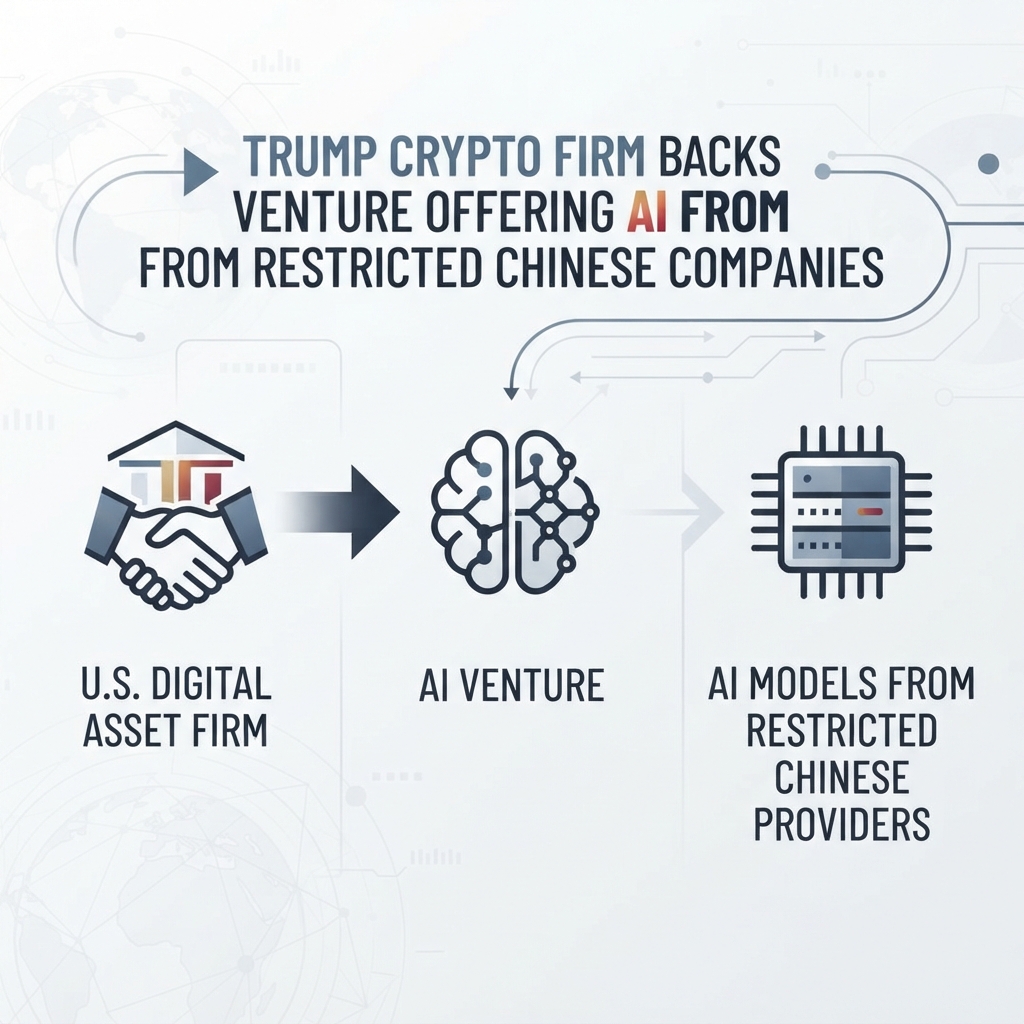
The Trump family's crypto venture is facing fresh scrutiny after backing an AI platform that distributes models from Chinese companies the U.S. government has previously flagged over national security concerns.
World Liberty Financial, the crypto company backed by President Donald Trump and his family, has partnered with WorldClaw, a Hong Kong-based platform that gives developers access to dozens of AI models from both U.S. and Chinese companies. According to Reuters, nearly half of the 90 available models come from Chinese firms including Alibaba, Baidu, and Z.ai—companies that have faced U.S. restrictions or government warnings related to security and intellectual property risks.
The partnership is legal, but it has sparked criticism because it appears to clash with the Trump administration's aggressive stance on limiting China's influence in advanced AI. While Washington has imposed export controls and warned against relying on certain Chinese AI technologies, WorldClaw is helping make those same models more accessible to developers worldwide. Payments on the platform are processed using World Liberty's USD1 stablecoin, creating another revenue stream for the Trump-backed business.
Supporters argue that AI platforms routinely aggregate models from multiple providers and that offering developers more choice encourages innovation. Critics, however, say the arrangement raises questions about conflicts between national security policy and private business interests, particularly when the companies involved have been publicly identified by U.S. agencies as potential security risks.
The controversy comes at a time when AI has become a key geopolitical battleground. Governments are tightening export controls, debating open-source AI, and investing heavily in domestic AI ecosystems, while companies continue searching for global markets and broader model access.
This story highlights the growing tension between AI policy and business incentives. Even as governments attempt to restrict access to certain AI technologies, commercial platforms are finding legal ways to distribute them globally. It also underscores how AI, crypto, and geopolitics are becoming increasingly interconnected.

The bigger picture is clear: AI is no longer just a technology race—it's becoming a geopolitical and commercial power struggle, where access to models can be just as important as building them. The companies that control AI distribution may ultimately wield as much influence as those creating the models themselves.