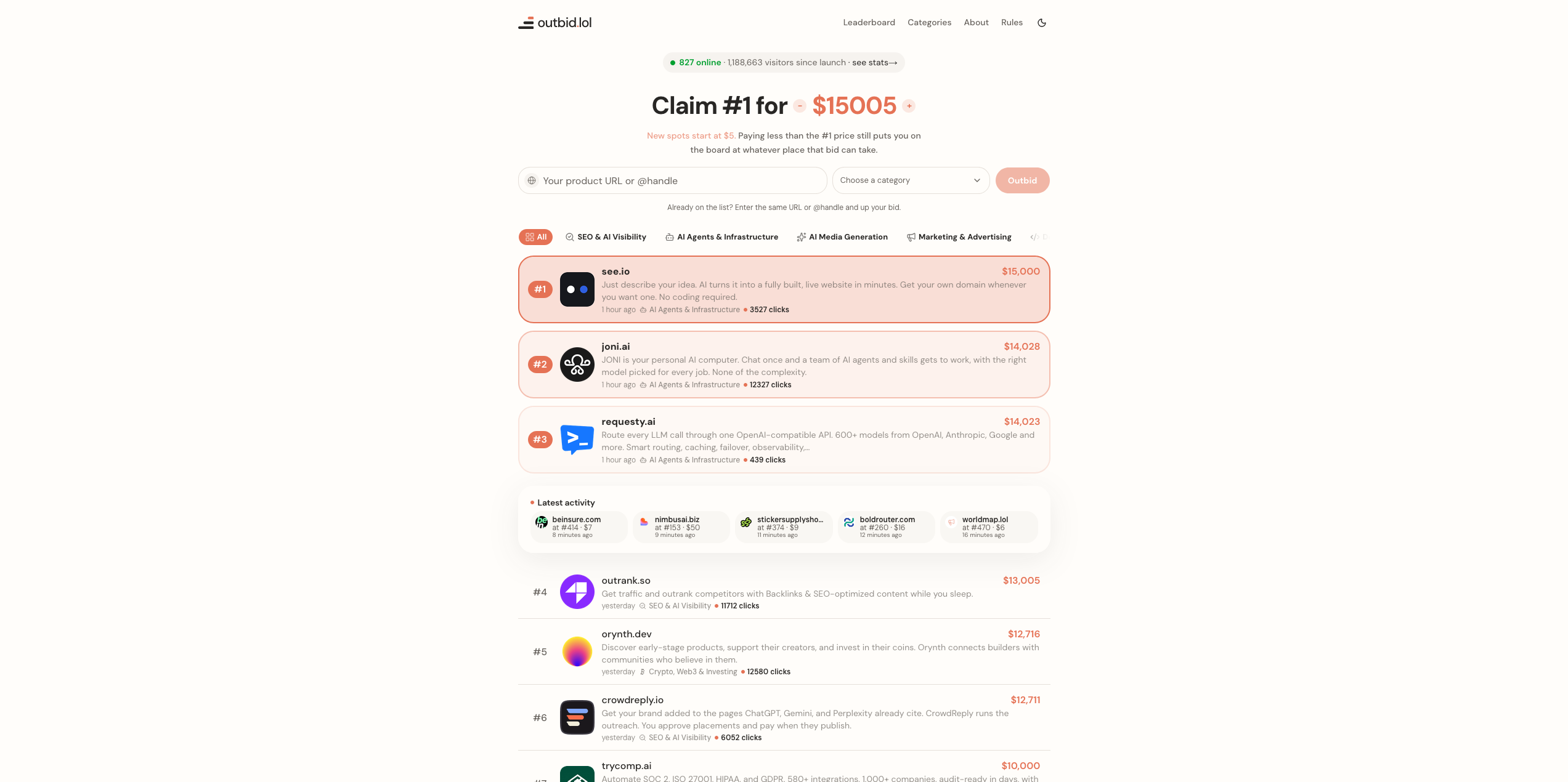
In the crowded world of indie hacking, most launches fade quietly. Every so often, something so absurdly simple cuts through the noise that it feels like the internet itself is in on the joke. That is exactly what happened with Outbid.lol.
On the evening of August 19, 2026, Jonathan Wilke posted a single tweet: the site was live. No ads. No API keys. No revenue sharing. Just outbid your competitors to rank #1 and call your marketing done for the day. Built in about three hours, the page was a public leaderboard where rank equaled the dollars you were willing to spend.
What followed was one of the fastest indie success stories in recent memory.
Outbid is ruthlessly transparent. You submit a website or X handle, choose a whole-dollar amount (starting at $5), and your listing appears at whatever rank that bid can buy. Want the top spot? Pay at least $5 more than the current leader. Already listed? Raise your bid and pay only the difference. Equal bids keep the older one higher. No algorithms, no quality scores, no editorial gatekeeping—just money and public accountability.
The board updates live. Clicks flow to the listed URLs. Categories (auto-assigned, with a DM option for corrections) help browsing, but the ranking itself is pure bid amount. This creates an immediate feedback loop: someone takes #1 → screenshots fly on X → more people visit → more people bid → the price of visibility rises in real time.
These are self-reported figures from the creator and the site’s counters, not audited financials. Payment processing fees, potential chargebacks, and the fact that re-bids mean cumulative spend can exceed the currently displayed board total mean net profit is lower. Still, for a solo-built experiment with near-zero marginal costs, the gross revenue velocity is extraordinary.
Several factors aligned perfectly:

Copycats flooded in within hours—dozens of .lol domains and variations for apps, crypto, jobs, regional currencies, and more. Some made meaningful money of their own; most rode the same wave of attention.
Outbid is not a sustainable long-term advertising platform in its current form. Novelty fades, and pure pay-to-rank eventually faces diminishing returns or regulatory/attention fatigue. But the launch itself is a masterclass:
Jonathan Wilke did not invent auctions or leaderboards. He stripped everything non-essential away, added a payment button, and posted the link. The market responded with more than $100k in days and a temporary new genre of “.lol bidding boards.”
The board is still running. Rank is still the bid—nothing else. Whether Outbid remains a one-time lightning strike or evolves into something more durable, it has already delivered a clear message to the indie community: sometimes the most powerful product is the one that turns competition itself into the feature.
If you’re building something this week, ask yourself: can someone understand it from a single screenshot? And would they feel the urge to outrank the person above them?
That urge, it turns out, is worth a lot of money.