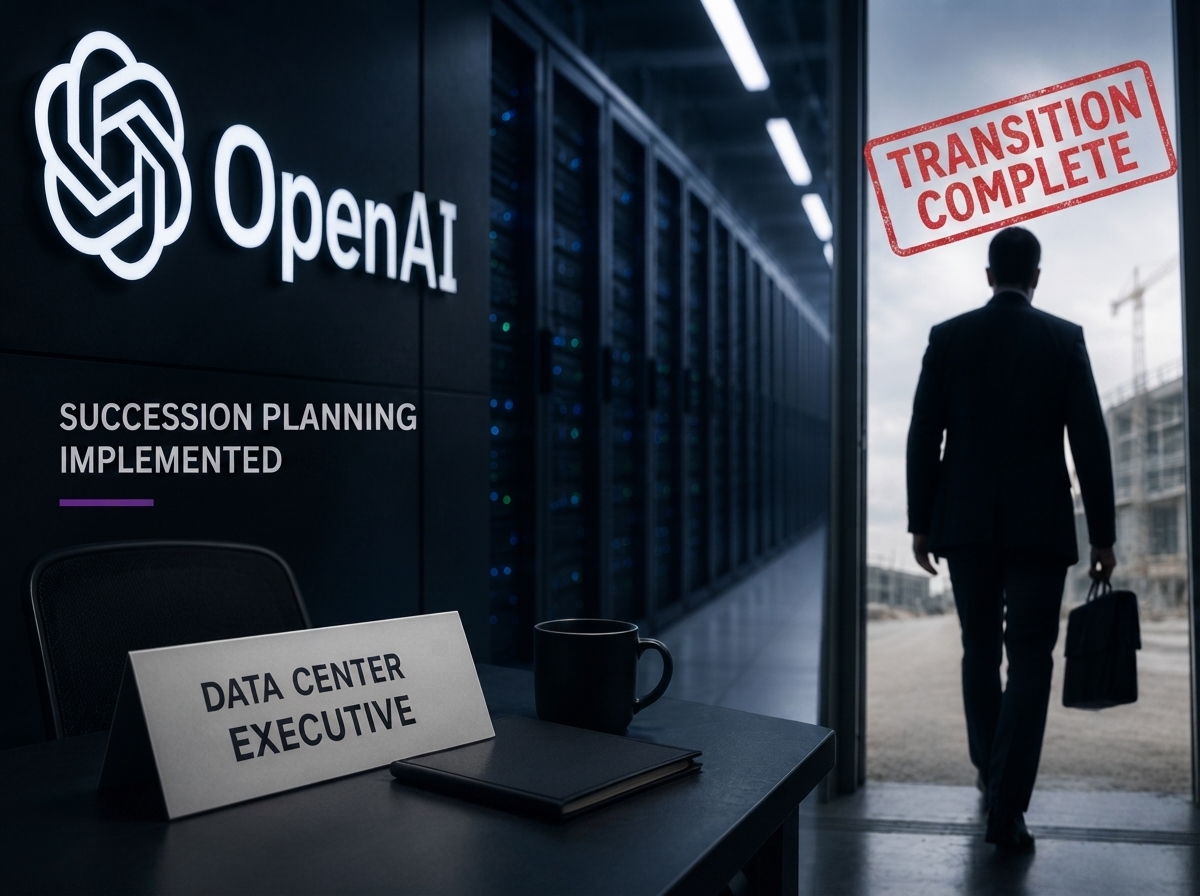
Chris Malone, OpenAI's head of data centers, has left the company after roughly a year and a half in the role. His departure comes as OpenAI pours hundreds of billions of dollars into expanding its computing capacity to support increasingly powerful AI models, making the timing especially significant.
Malone joined OpenAI from Meta in 2025 to help lead its ambitious data center strategy, including the massive Stargate initiative with Oracle and SoftBank. Since then, OpenAI has shifted parts of its infrastructure strategy, relying more heavily on cloud partners while also restarting efforts to build and lease dedicated AI data centers of its own. Before leaving, Malone's organization had already undergone an internal restructuring, with infrastructure leadership moved under new management.
His exit is the latest in a growing list of high-profile departures from OpenAI this year. Former COO Brad Lightcap, Chief Revenue Officer Denise Dresser, and former applications chief Fidji Simo have all stepped away from their roles, while the company has continued reshuffling its leadership team ahead of its expected IPO.
OpenAI insists its infrastructure ambitions remain on track. The company has promoted Uday Ruddarraju to oversee computing capacity, hired former xAI executive Brent Mayo to manage major infrastructure projects, and continues to pursue enormous data center investments that could define the next decade of AI development. Reports suggest OpenAI could spend as much as $750 billion on compute infrastructure through 2030, highlighting just how central data centers have become to the AI race.
Why it matters: AI leadership is no longer just about building better models—it's about securing enough chips, power, and data centers to run them. Losing the executive overseeing that strategy during a massive infrastructure expansion raises fresh questions about execution at one of the industry's most closely watched companies.
The upside: OpenAI has already begun reorganizing its infrastructure team and continues to secure new computing partnerships and data center capacity, suggesting its long-term roadmap remains intact despite the leadership changes.
The downside: A steady stream of senior departures can create uncertainty, particularly as OpenAI prepares for its next phase of growth. Replacing experienced leaders while simultaneously building one of the world's largest AI infrastructure networks is no small task.
The AI race is increasingly becoming an infrastructure race. Models may grab the headlines, but the companies that control the compute behind them could ultimately shape the future of artificial intelligence.