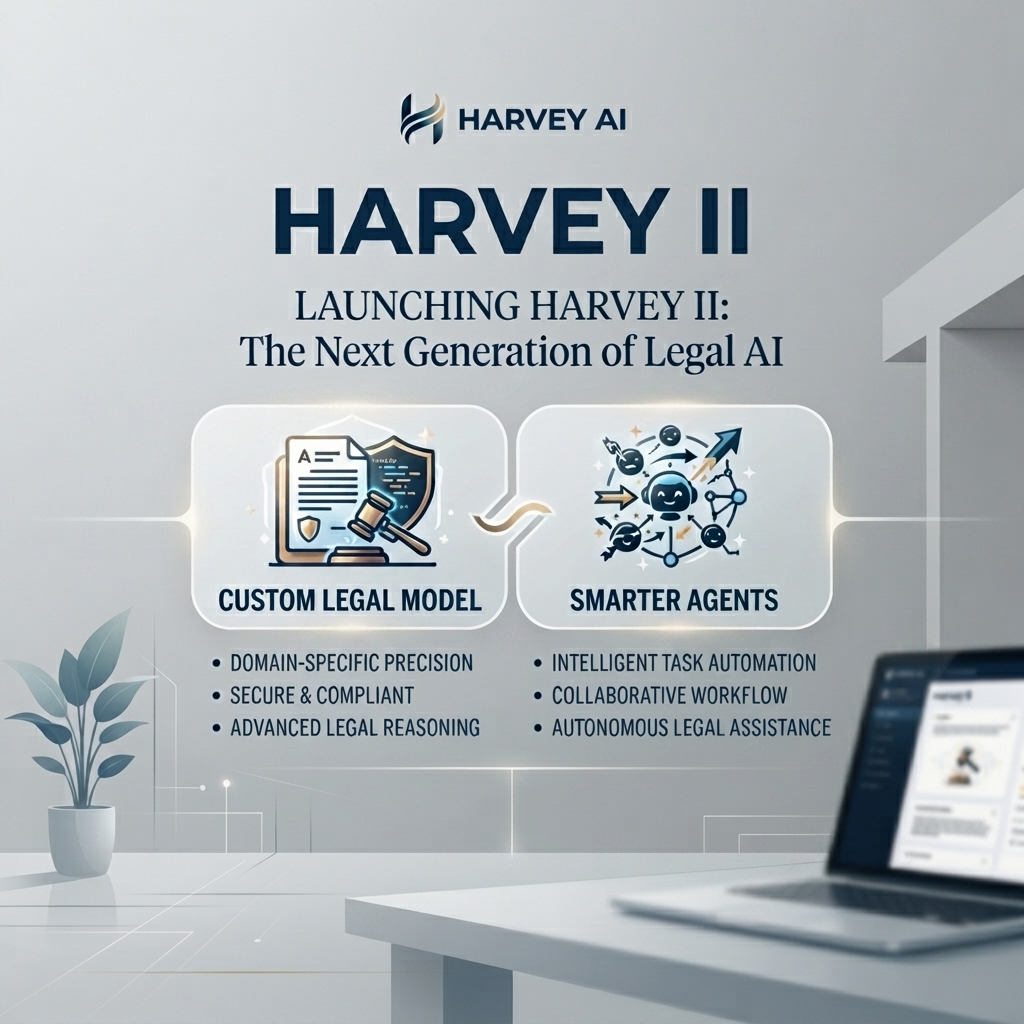
Harvey is taking another major step toward becoming the operating system for legal professionals.
The OpenAI-backed startup has launched Harvey II, a significant upgrade that combines a new proprietary legal AI model, personalized memory, and more capable AI agents that can handle multi-step legal workflows with minimal human input.
At the center of the release is Harvey Tenet, the company's first custom-built large language model trained specifically for legal work. Instead of relying entirely on general-purpose frontier models, Harvey designed Tenet to tackle complex legal reasoning, document analysis, and high-volume case work more efficiently while reducing inference costs. The company says the model can also serve as the foundation for firms that want to build their own customized legal AI systems.
Harvey II also introduces Memory, allowing the platform to remember a lawyer's writing style, document preferences, and workflow across sessions. Rather than starting every interaction from scratch, the AI gradually learns how each user works, making future drafting, research, and review tasks faster and more personalized. Harvey plans to expand this from individual memory to organization-wide knowledge over time.
The upgrade extends to Harvey's AI agents as well. The new agents can orchestrate complex legal workflows by combining multiple tools, documents, and reasoning steps into a single automated process. Firms can also build their own specialized agents tailored to internal practices, compliance requirements, or client needs.
The timing reflects a broader shift in enterprise AI. Instead of simply generating text, AI platforms are increasingly being built to complete entire knowledge-work processes. Harvey says usage has surged from roughly 1 trillion to 14.5 trillion tokens per month in just six months, suggesting customers are moving from experimentation to everyday legal operations.
Harvey II signals the next phase of vertical AI. Rather than competing as another general chatbot, Harvey is building software specifically for legal professionals, combining domain-trained models, persistent memory, and autonomous agents into a platform designed to automate high-value legal work. If successful, it could become a blueprint for AI across other professional industries such as finance, healthcare, and consulting.