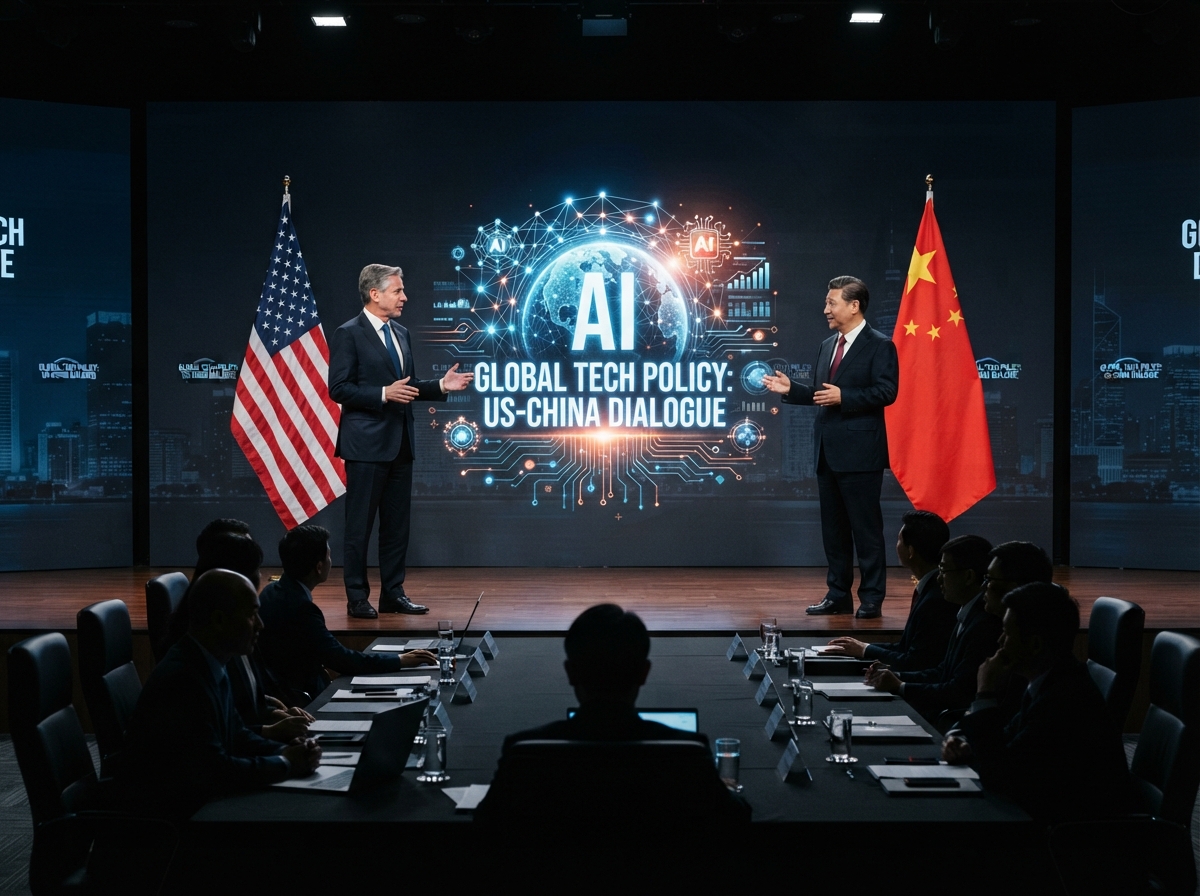
The Microsoft co-founder says he hopes to meet with Chinese President Xi Jinping later this year to discuss global AI safety, arguing that meaningful safeguards will only work if both the United States and China are involved. It's a notable shift from Gates, who has long championed AI's potential but now believes the technology is advancing faster than governments can manage.
His concerns go beyond the usual debates over jobs and misinformation. Gates warned that increasingly powerful AI models could eventually help design dangerous biological agents, carry out sophisticated cyberattacks, or be used in ways that threaten global security. Rather than relying on individual companies to police themselves, he wants governments to establish international standards for the most advanced AI systems.
Among the ideas Gates is pushing are global safety rules for frontier AI models, stronger oversight of AI systems capable of creating biological threats, and the creation of an international body dedicated to AI governance—similar to how the world oversees nuclear technology and civil aviation. He also believes countries should start preparing for AI's economic impact by strengthening social safety nets and preserving certain jobs where human judgment remains essential.
The timing is significant. The U.S. and China are locked in an increasingly fierce AI race, with both nations pouring billions into chips, models, and infrastructure. Yet Gates argues that competition alone won't solve the risks posed by frontier AI. If the world's leading AI nations cannot agree on basic safety principles, regulating the technology globally could become nearly impossible.
Why it matters: AI is becoming a geopolitical issue as much as a technological one. Gates' call for direct talks with Xi underscores a growing belief that AI safety cannot be addressed by any single country or company—it will require international cooperation between rivals.
The upside: If major AI powers can agree on shared safety standards, it could reduce the risks of misuse while allowing innovation to continue, creating a more stable foundation for the next generation of AI.
The downside: U.S.-China tensions remain high, and reaching meaningful agreements on AI governance may prove far more difficult than Gates hopes. Without cooperation, countries could prioritize winning the AI race over managing its risks.
The AI conversation is rapidly shifting from building smarter models to figuring out who gets to govern them. Bill Gates wants that discussion to happen at the highest political level—and he believes the window to act is closing.